
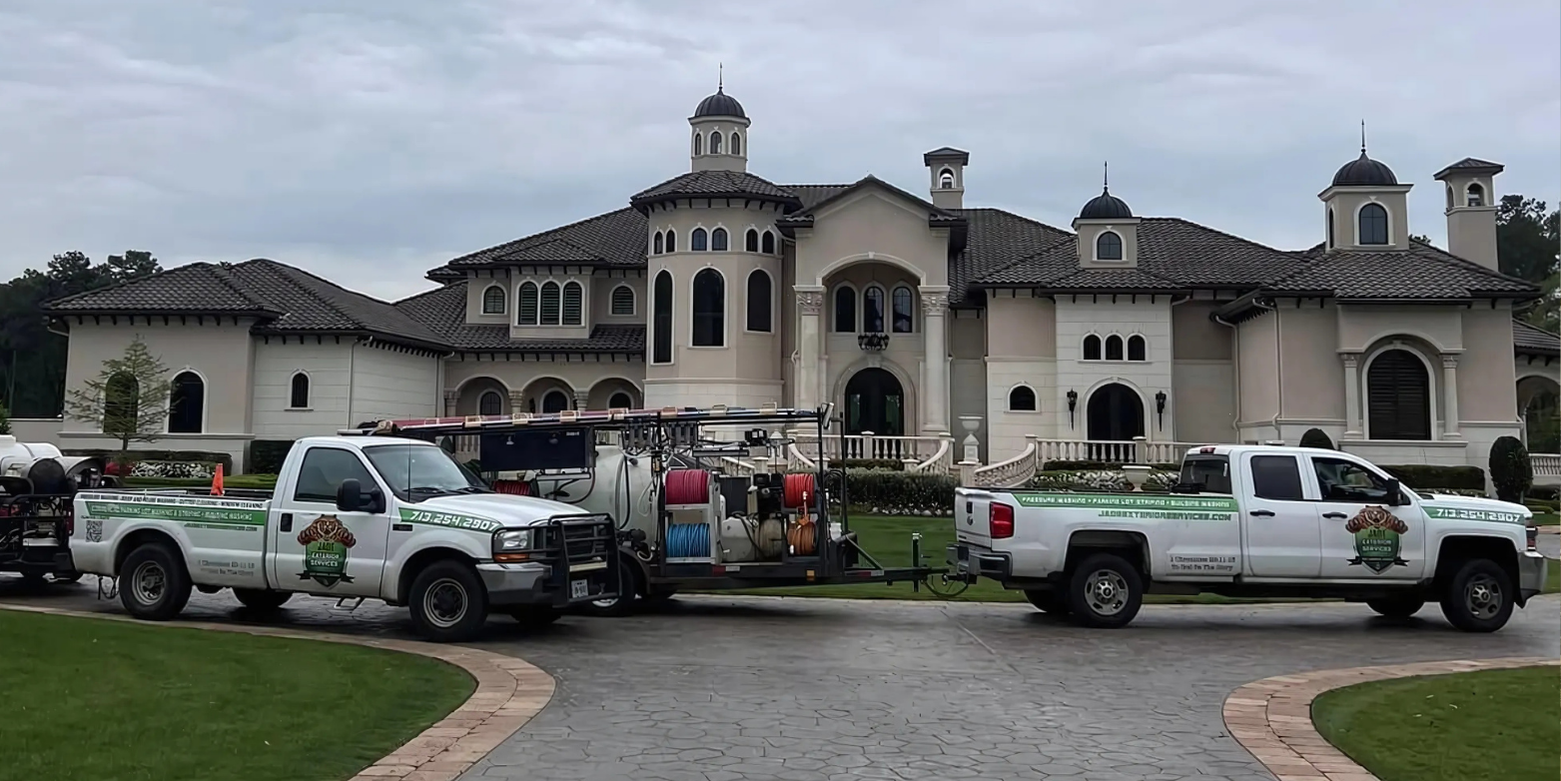
Pressure Washing for Driveways, Walkways, and Patios
If your driveway has dark streaks, your walkway looks dull, or your patio is collecting grime, the right exterior cleaning approach makes a noticeable difference. This guide explains how professional pressure washing services typically handle common buildup, what to check before you schedule, and how to avoid damage.
Last week, you might have noticed it: water beads on the concrete, but the surface still looks dirty. In the shade, black streaks seem to “grow” back faster than you expect. And when you try scrubbing, it only lightens a few spots while the rest stays stained.
Before you rent equipment or start blasting, it helps to understand what’s actually on the surface. Pressure washing can remove algae, mildew, mud, and everyday grime, but different materials and stain types need different techniques. Below, you’ll find a practical way to evaluate your driveway, walkway, and patio so you can choose a safe, effective cleaning plan in Spring, TX.
Quick Answer
For most driveways, walkways, and patios in Spring, TX, the best results come from matching the cleaning method to the surface and the type of buildup. A professional exterior cleaning approach typically starts with an inspection, then uses the right pressure level and nozzle, and finishes by rinsing thoroughly so soap and residue do not remain. If you’re seeing black streaks, algae, or mildew, plan on targeted cleaning rather than one-size-fits-all blasting. For a residential pressure washing contractor you can trust, contact Jade Exterior Services at (281) 730-7051.
What to Check First
Before scheduling pressure washing services, take five minutes to look at the problem areas. This helps you explain what you’re seeing and ensures the cleaning approach fits your property.
Professional observation: Dark streaks are often biological growth or trapped dirt, while lighter gray film can be general surface grime. The cleaning method that works for one may not be ideal for the other.
- Surface material: Is it poured concrete, stamped concrete, pavers, brick, or a patio coating? Each responds differently to high pressure.
- Location and exposure: Areas under trees, near irrigation overspray, or along shaded walls tend to collect algae and mildew faster.
- Stain type: Tire marks, oil spots, rust-like discoloration, and algae streaks often require different attention than general dirt.
- Condition: Cracks, spalling, loose mortar, or worn coatings can affect how aggressively the surface can be cleaned.
- Nearby surfaces: Your driveway is connected to landscaping beds, sidewalks, and sometimes garage doors. The cleaning plan should protect adjacent areas.
Driveway cleaning
Focus on general grime, algae streaks, and traffic-related dirt. The goal is a uniform clean finish without gouging or lifting surface texture.
Walkway restoration
Look for mildew along edges and shaded sections. Gentle-to-moderate cleaning helps keep surfaces even and slip-resistant.
Patio refresh
Patios collect pollen, organic debris, and residue over time. A thorough rinse helps prevent leftover film from reappearing quickly.
Main Things Customers Should Understand
When homeowners ask about local power washing near me, the real question is usually: “What will the cleaning process do to my specific surface?” Here are the key factors that drive good outcomes for exterior cleaning services.
1) Pressure level and nozzle choice
Pressure washing isn’t just “more pressure equals better.” Using the right pressure and spray pattern helps lift buildup without damaging concrete edges, joints, or worn surfaces. Professionals also adjust based on how the surface is reacting as they clean.
2) Cleaning chemistry and dwell time
Many visible stains are not just dirt. Biological growth often needs a chemical approach, plus enough dwell time to loosen growth before rinsing. That’s one reason professional exterior property cleaning can outperform DIY scrubbing.
3) Rinsing and runoff control
A common complaint after DIY cleaning is leftover residue. Proper rinsing matters because soap and loosened grime can dry back onto the surface, especially in humid conditions. A full-service exterior cleaning contractor should plan for runoff and protect nearby plants and surfaces.
4) Matching the job to your property type
In Spring, TX, many properties have older driveways, established landscaping, and shaded walkways. That mix means cleaning often needs to be methodical rather than rushed.
| What you’re seeing | What it often indicates | Why the method matters | Best next step |
|---|---|---|---|
| Black streaks on concrete | Algae or mildew growth | Targeted cleaning helps remove growth without leaving a gray film | Ask about a surface-specific cleaning plan |
| Light gray haze | General dirt and oxidized grime | Over-aggressive blasting can damage texture or edges | Confirm pressure approach and rinsing steps |
| Tire marks near driveway access | Traffic-related buildup | Spot attention can be safer than whole-surface blasting | Point out the heaviest areas first |
| Stains near landscaping | Organic debris or runoff residue | Adjacency matters for protecting nearby plants | Plan cleaning so runoff is controlled |
Why This Matters in Spring, TX
In Spring, TX, the combination of shade, humidity, and seasonal plant growth means organic buildup can return faster than many homeowners expect. Driveways and walkways often sit partially shaded near trees or along fence lines, which can encourage algae and mildew to develop in streaks.
Jade Exterior Services approaches driveway, walkway, and patio cleaning with that local reality in mind. The goal is to remove buildup effectively and help the surface stay cleaner longer by using the right combination of pressure, technique, and thorough rinsing.
Need driveway, walkway, or patio cleaning in Spring, TX?
Tell us what you’re seeing, and we’ll point you toward a practical pressure washing approach for your surface. Call (281) 730-7051 or visit our pressure washing services.
Contact Jade Exterior ServicesCommon Mistakes to Avoid
Pressure washing can look simple, but a few missteps can make results worse or even create new problems. Here are the mistakes we see most often.
- Using too much pressure on worn or textured surfaces: High pressure can erode edges and alter the appearance of concrete.
- Skipping the inspection: If the surface has cracks, loose material, or a coating, the cleaning method needs to be adjusted.
- Assuming all stains are the same: Algae streaks and oil spots respond differently. Treating everything the same can lead to uneven results.
- Not rinsing thoroughly after cleaning: Leftover residue can dry and create a dull film that makes the surface look dirty again.
- Cleaning only the “worst” spots: Spot cleaning can leave a visible boundary. A consistent approach often looks better overall.
Firsthand observation: When I walk a property before cleaning, the driveway often looks “mostly okay” from the street, but the shaded edges and joints are where the buildup really collects. If you miss those transition areas, the cleaned surface can still look uneven after it dries.
Customer Checklist
Use this checklist to prepare for a driveway, walkway, or patio cleaning job. It helps you get clearer results and a smoother experience.
- Walk the full driveway and note the heaviest streaks, stains, and shaded sections.
- Check for cracks, spalling, or loose joints and point them out before cleaning begins.
- Move vehicles and items so the cleaning crew can access edges and corners.
- Identify nearby landscaping beds, fences, or adjacent surfaces that need protection.
- Confirm whether you’re looking for general exterior cleaning services or focused algae and mildew removal.
- After the cleaning, rinse and dry properly before vehicles or furniture go back in place.
Representative Scenario: “The Driveway Looks Clean, But the Streaks Came Back”
A homeowner in Spring, TX called after noticing dark streaks along the shaded edge of their driveway. The center looked better than before, but the lines near the border were still visible after a quick DIY rinse. When we inspected the area, the buildup was concentrated where the driveway meets joints and where shade slows drying. The surface needed a more targeted approach, then a thorough rinse to remove loosened residue.
Once the cleaning plan matched the buildup pattern, the driveway looked more uniform and the streaking reduced noticeably compared to the partial approach.
Frequently Asked Questions
Will pressure washing remove algae and mildew from concrete?
It often can, especially when the cleaning plan targets the biological growth and uses the right dwell time before rinsing. In Spring, TX, shaded areas are a common spot for mildew and algae to form on driveways and walkways. A professional approach helps avoid uneven results by cleaning the affected zones carefully and rinsing thoroughly so loosened growth does not dry back as a gray film.
Is pressure washing safe for pavers, brick, or stamped concrete?
Safety depends on the condition of the surface and the method used. Different materials can handle different pressure levels and spray patterns. For example, joints, edges, and worn textures may be more sensitive. A professional residential pressure washing contractor will inspect the area first, then adjust technique to lift buildup without damaging the surface. If you’re unsure what you have, show the crew a few close-up photos or be ready to describe the material.
Why does my driveway look dull or dirty again after cleaning?
That “dirty again” look is commonly caused by leftover residue or incomplete rinsing. Soap, loosened grime, and biological growth can redeposit if they are not fully washed away. Humidity can also slow drying, which may make residue more noticeable. When you choose exterior cleaning services, ask about rinsing steps and how they plan to prevent leftover film from drying on the surface.
Should I clean my driveway and sidewalk at the same time?
Often, yes. Cleaning related surfaces together helps the results blend naturally and avoids visible boundaries between “cleaned” and “not cleaned yet” areas. Driveways and walkways also tend to collect similar buildup types, especially in shaded sections. If you want a consistent curb appeal refresh, scheduling them as one coordinated job can be a practical option.
What’s the difference between pressure washing and house washing services?
Pressure washing typically refers to cleaning hard exterior surfaces like concrete, sidewalks, and some outdoor areas. House washing services focus on exterior building surfaces such as siding and brick, where the approach may need to be gentler to protect the material. If you’re also dealing with algae on your home itself, Jade Exterior Services can help you plan a consistent cleaning strategy using the right method for each surface type.
Get your driveway, walkway, and patio looking like new again
For professional pressure washing services in Spring, TX, contact Jade Exterior Services. We’ll help you choose a practical approach based on what you’re seeing on your specific surfaces.
Call (281) 730-7051Explore house washing services if you’re also treating siding and brick house washing areas.