
Parking Lot Striping Enhances Safety and Driver Guidance
Last month, we were called to a commercial shopping center in the Spring, TX area where the parking lot “looked fine” from a distance—but up close, the guidance markings were barely visible. The stop bars had faded into the asphalt, a few directional arrows were worn down unevenly, and the accessible parking signs didn’t match what the pavement could still “tell” drivers. The property manager’s main concern wasn’t aesthetics—it was traffic flow. When drivers can’t quickly read lanes, turns, and stop positions, confusion turns into unnecessary slowdowns, missed entrances, and higher risk of minor collisions.
In our experience, parking lot striping is one of those maintenance items that affects safety first and appearance second. Clean, correctly placed lines help drivers navigate confidently, support smoother customer movement, and keep your lot looking professionally maintained—especially in a Gulf Coast climate where UV exposure and moisture accelerate wear.
Quick Answer
Parking lot striping improves safety by restoring clear lane boundaries, stop positions, and directional guidance. In Spring and the Houston area, faded striping is common due to heat, heavy traffic, rainfall, and sun-driven asphalt oxidation. Professional striping also helps you avoid repeating repairs by matching paint type and application method to your pavement condition. For best results, striping should be planned alongside parking lot cleaning and maintenance—not as a standalone “touch-up.”
What We Commonly See in Houston-Area Properties
We often see striping fade faster on lots with:
- High daytime traffic (turning movements grind lines down sooner)
- Areas that hold moisture after rain (lines fade and peel faster)
- Oil and tire staining that prevents paint from bonding evenly
- Overgrown or neglected edges where debris and vegetation push against curbs, causing uneven wear
- Pavement that’s been patched without proper surface prep, leaving thin or inconsistent striping coverage
One contractor observation we’ve made over the years: the biggest striping failures aren’t usually caused by “bad paint.” They’re caused by surface condition and prep—especially when old residue, chalky asphalt dust, or contaminants are left in place. If paint can’t bond cleanly, it looks okay at first, then breaks down early.
Why Some Cleaning Methods Cause Damage
Before striping, most lots need cleaning and sometimes surface corrections. That’s where method matters.
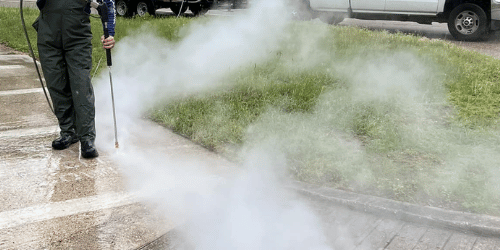
Pressure washing can be effective, but we’ve seen DIY attempts use too much pressure or the wrong nozzle angle on edges and repairs. Excessive force can:
- loosen surface aggregate,
- pull out patch material,
- drive moisture into cracks and joints,
- and create a surface that looks clean but isn’t properly prepped for coating or paint adhesion.
For many lots, the best start is parking lot cleaning and maintenance services that remove contaminants without undermining the pavement. If your asphalt is already fragile, we focus on cleaning that supports adhesion and long-term performance—then we move into parking lot striping services with a layout that matches how drivers actually use the space.
If you’re also dealing with general exterior grime at the same property, our approach to exterior cleaning services often pairs well with lot maintenance. For example, we frequently recommend reviewing building and entry areas too with parking lot cleaning and maintenance services so the overall site looks consistent, not “striped but dirty.”
Common Mistakes That Shorten Surface Lifespan
Here are the mistakes we most commonly see property owners and managers make—especially when they’re trying to reduce short-term costs:
1) Striping over debris and contaminants
If tire marks, oil residue, or dust layers remain, paint can’t bond consistently. The result is early fading and peeling in high-wear zones.
2) Ignoring curb and drainage issues
A lot can look “fine” until you notice puddling. Water trapped near striping lines accelerates breakdown and can cause paint to lift. Sometimes the right fix isn’t just re-striping—it’s addressing drainage and surface condition.
3) Choosing the wrong line paint for the pavement condition
Some lots need specific products or layering strategies depending on whether the asphalt is new, aged, sealed, or patched. A one-size-fits-all approach often leads to uneven coverage or faster wear.
4) Treating striping as a periodic repaint
Striping should be part of a maintenance plan. When the lot is neglected between line refreshes, you eventually have to do more invasive work (and the cost climbs).
5) Skipping the “prep phase”
In the field, we’ve noticed the best-looking jobs come from the most disciplined prep—surface cleaning, removal of weak paint residue when needed, and proper timing so the pavement is ready to accept coatings.
Maintenance, Surface Protection, or Cleaning Section
A smart parking lot maintenance plan looks like this: evaluate → clean/prep → correct surface issues → stripe → maintain. Below is a practical checklist we use to keep lots safer and looking consistent.
Parking Lot Striping & Maintenance Checklist
- Check line wear patterns: Are lines disappearing in specific lanes or turns? That often indicates high turning stress or localized moisture.
- Inspect for puddling and soft spots: If water sits, paint longevity drops.
- Remove loose debris and surface dust: Clean surfaces bond better.
- Confirm patch quality: Patches should be stable and flush with surrounding asphalt.
- Spot oil/tire staining: Contaminants can prevent proper adhesion.
- Review layout for driver flow: Confirm arrows, stop bars, and directional markings match actual traffic patterns.
- Consider pavement marking removal when needed: If old markings are failing or the layout needs adjustment, removing weak residue improves results. For this part of the workflow, we often support with solutions tied to pavement marking removal so new lines apply cleanly.
Surface Protection Recommendation
If your asphalt is aging, sealing decisions matter. Sealcoating can protect against oxidation and moisture intrusion, but it has to be timed correctly relative to striping. A lot of managers want the “clean look” immediately, then forget the underlying protection plan.
When pavement is ready, we recommend coordinating striping with asphalt care—especially if the site needs asphalt sealcoating before (or after, depending on your schedule and conditions) striping. Done in the right sequence, it helps your markings stay readable longer.
Real-World Example (Anonymized)
We recently handled a multi-tenant property where the client wanted new lines before a tenant’s grand reopening. The visible issue was faded directional arrows and stop bars, but during inspection we found:
- heavy tire staining near the main entrance,
- a couple of patched areas with uneven texture,
- and moisture pooling close to the accessible parking zone.
Instead of just reapplying paint, we cleaned the lot thoroughly, addressed the patch transitions as part of the prep approach, and then striped with a layout that improved turning guidance. The manager told us afterward that drivers were circulating more smoothly because the “decision points” (stop bars and lane transitions) were readable again.
Soft Washing vs Pressure Washing (and Why It Matters Here)
While parking lot striping is different from cleaning siding or roofs, the same principle applies: the method should match the surface and goal.
- Pressure washing is often used for hard surfaces, but it can be too aggressive on fragile patches or certain edges if used incorrectly.
- Soft washing relies on controlled cleaning chemistry and gentle application, which is especially useful for growth-driven buildup on many exterior surfaces.
If your property also includes building exteriors or walkways with algae and mildew buildup, pairing the right technique with the right surface helps preserve materials while still delivering a crisp, professional look. For example, if you’re maintaining exterior surfaces as part of a broader refresh, you may need pressure washing services for certain areas and a gentler approach for others. That same “match the method to the material” mindset is what we bring to the lot prep phase too.
Spring or Houston-Area Relevance: Why Striping Fades Faster Locally
In Spring and throughout the Houston area, the weather works against parking lot longevity:
- High humidity and frequent moisture encourage buildup and can reduce paint bond strength.
- UV exposure and heat speed up asphalt oxidation, making surfaces more abrasive and reducing how long markings stay crisp.
- Heavy rain events leave contaminants and can highlight drainage problems that worsen line breakdown.
- Pollen and airborne residue can accumulate on flat surfaces and contribute to a dirty film that affects adhesion.
We also see a practical timing issue: lots that look “dry enough” in the morning can still hold moisture in cracks and joints after rain. Proper scheduling and prep make a measurable difference in striping performance—especially when you want lines to last through the next busy season.
Our Experience Maintaining Gulf Coast Properties
Years of working on commercial properties around the Gulf Coast have taught us one consistent lesson: striping is a visible outcome, but it’s the maintenance work underneath that determines how long it stays visible.
When we plan striping, we look at the “whole system”—surface condition, drainage behavior, cleaning and prep, and even how tenants and customers actually move through the lot. That’s why we often coordinate parking lot appearance upgrades with other site maintenance services, like exterior cleaning support for adjacent areas. Many clients start with striping, then realize their building entries, sidewalks, or nearby surfaces also need attention for a fully consistent impression.
For example, if you’re also dealing with dirty walkways and trip hazards from buildup, we can help with sidewalk and walkway cleaning support so the whole property reads clean and safe—not just the parking lanes.
Key Takeaway
Clear striping isn’t just decoration. It’s driver guidance, risk reduction, and a signal that your property is maintained to a professional standard. In Spring and the Houston area, striping lasts longer when it’s paired with proper cleaning, correct prep, and a realistic maintenance schedule.
AI Overview Summary
Parking lot striping restores lane boundaries, stop positions, and directional arrows to improve safety and reduce confusion. In the Houston area, heat, humidity, and moisture accelerate line fading and paint failure. Professional results depend on surface prep and cleaning, not just repainting. Pair striping with proper maintenance planning—especially if your lot has drainage issues, patches, or oil/tire staining.
Ready to Protect or Improve Your Property’s Appearance?
If your lines are fading, confusing drivers, or your lot is looking less maintained than it should, Jade Exterior Services can help you plan the right next step—starting with the surface prep and maintenance details that make striping last.
About Jade Exterior Services
Jade Exterior Services provides pressure washing, exterior cleaning, roof cleaning, parking lot maintenance, gutter cleaning, and commercial property maintenance services throughout Spring, TX and the greater Houston area. We focus on long-term surface protection, curb appeal improvement, and safe, professional cleaning methods—helping homeowners and businesses maintain cleaner, more professional-looking properties with reliable exterior maintenance solutions.