
It usually starts with small complaints: a customer mentions that the parking spaces at your business are confusing, a delivery truck blocks traffic because there’s no clear loading zone, or someone nearly backs into another car because the arrows on the asphalt have almost completely faded. In the daylight, the lot looks tired; at night, it feels unsafe and disorganized. That’s the moment most property owners in Spring, TX realize they don’t just need “a few new lines” – they need a comprehensive parking lot striping plan that brings order, safety, and curb appeal back to their property.
Parking lot striping may look simple from a distance – just paint on asphalt – but every line, symbol, and color has a purpose. Properly planned striping controls traffic flow, defines parking capacity, protects pedestrians, supports ADA compliance, and even influences how long customers stay on-site. For businesses, churches, medical offices, HOAs, and industrial facilities in Spring, TX, a well-striped lot is both a first impression and a silent safety system. Jade Exterior Services understands that comprehensive striping is less about paint and more about design, compliance, and long-term performance.
This guide walks through everything you should know before your next striping project: how to evaluate your current lot, what regulations apply, how layout decisions affect traffic and revenue, which materials last in our Texas climate, and why professional planning matters. Whether you manage a small retail center on a busy corner or a large corporate campus near I-45, thinking strategically about your striping will help you avoid costly mistakes and keep your property looking sharp for years.
Why Striping Really Matters
Many property owners in Spring, TX view striping as a cosmetic touch-up, something to handle only when the lot looks obviously worn. In reality, striping is part of your risk management strategy. Clear, visible lines and symbols reduce collisions, help prevent pedestrian accidents, and guide vehicles in a predictable pattern. When traffic moves smoothly, drivers are less stressed, and the likelihood of confusion-related accidents drops dramatically.
Striping also plays a direct role in how your business is perceived. A freshly striped parking lot signals that the property is maintained, organized, and safe. Customers are more likely to feel comfortable parking, getting out of their vehicles, and spending time on-site. On the other hand, faded lines, missing arrows, or unclear handicap spaces can make your property feel neglected, which subtly influences whether people choose to return.
From an operational standpoint, striping determines how many vehicles you can safely accommodate and how efficiently they move. If your lot is not laid out strategically, you might be losing usable spaces, creating traffic bottlenecks, or making it difficult for delivery vehicles and emergency responders to maneuver. Jade Exterior Services takes these functional factors into account when striping lots in Spring, TX, focusing on both the look and the logistics of your space.
Assessing Your Existing Parking Lot
Before any paint is applied, a thorough assessment of your current lot is essential. This starts with walking the property and observing how it’s actually used during peak and off-peak times. Are there areas where traffic regularly backs up? Do pedestrians cut across drive lanes because walkways are missing or inconvenient? Are certain spaces consistently empty because they’re tight, awkwardly placed, or feel unsafe?
Next, evaluate the condition and visibility of existing markings. In Spring’s intense sun and occasional heavy rains, paint can fade faster than many property owners expect. Look at your stall lines, arrows, crosswalks, and handicap symbols from a driver’s perspective, not just from above. If markings are hard to see at dusk, in rain, or from a moving vehicle, they’re no longer doing their job. Cracked or uneven asphalt may also need attention before restriping to ensure the new lines adhere properly and remain straight and clean.
An assessment should also include a compliance review. Confirm the number and placement of accessible parking spaces, the presence of van-accessible spots, the dimensions of stalls and aisles, and the visibility of signage. Older properties in Spring, TX are especially likely to be out of date on ADA requirements or local code changes. Jade Exterior Services can help identify these gaps so you’re not just repainting the same outdated layout but upgrading to a safer, more compliant design.
Planning Layout, Flow, And Compliance
Once you understand the current state of your lot, the next step is planning a layout that balances capacity, safety, and ease of use. One of the biggest decisions is stall orientation: 90-degree (straight-in) parking maximizes space but can be harder for drivers to enter and exit, especially in tight lots. Angled parking (typically 45 or 60 degrees) offers easier maneuvering and improved traffic flow but may reduce the total number of spaces. The right choice depends on lot size, typical vehicle types, and how long visitors stay.
Traffic flow is another core element of a comprehensive striping plan. This involves determining where one-way and two-way lanes make sense, how many entry and exit points you have, and where directional arrows, stop bars, and signage should be placed. For properties in busy parts of Spring, TX, carefully designed flow can prevent backups onto public roads and reduce near-misses at blind corners. Clearly marked fire lanes and no-parking zones are vital so emergency vehicles always have access.
ADA compliance must be integrated into the layout from the start, not added as an afterthought. The number of accessible spaces is based on total parking count, and these spaces must be located on the shortest accessible route to entrances. Van-accessible stalls require additional width and access aisles, and the striping and signage must be highly visible and properly marked. A comprehensive plan maps out these spaces, the crosswalks leading from them, and curb ramps so that people with mobility challenges can navigate safely and independently.
Finally, consider special-use areas: loading zones for deliveries, designated pick-up and drop-off points, short-term parking near entrances, and employee-only sections. Clear striping and signage in these zones help prevent unauthorized parking that can disrupt operations. Jade Exterior Services works with property managers across Spring, TX to tailor layouts to each site’s specific traffic patterns, rather than using a one-size-fits-all template.
Choosing Striping Materials And Methods
Not all striping materials are created equal, and the Texas climate can be tough on poorly chosen products. The most common option is water-based traffic paint, which is cost-effective and dries relatively quickly. For many commercial properties in Spring, TX, this is sufficient when applied correctly and maintained on a regular schedule. However, high-traffic areas like main drive lanes, entrances, and crosswalks may benefit from more durable materials.
Solvent-based paints and thermoplastic markings offer increased longevity and resistance to wear. Thermoplastic, in particular, bonds strongly to the pavement and can last several years in heavy-use zones, making it ideal for stop bars, arrows, and crosswalks. Reflective beads can be added to paint or thermoplastic to improve nighttime visibility, which is important for lots that serve restaurants, medical facilities, or 24-hour operations where drivers rely on clear guidance after dark.
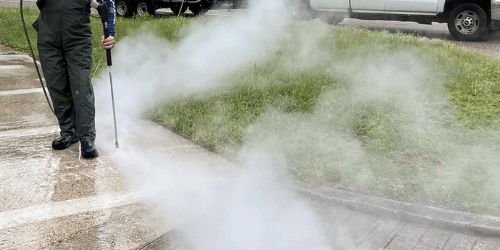
The method of application matters as much as the material. Professional striping with calibrated machines ensures consistent line width, sharp edges, and proper spacing. Surface preparation is crucial: the pavement should be clean, dry, and free of loose debris, oil, or old flaking paint. In some cases, pressure washing or light surface prep is needed before new lines go down. While Jade Exterior Services also offers services like Window Cleaning, the same attention to detail in cleaning applies to preparing your parking surface for high-quality striping.
Timing also plays a role in material performance. Striping should be scheduled during suitable weather conditions and at times when the lot can be partially or fully closed to allow proper drying and curing. For Spring, TX properties, this often means planning around rain forecasts and extreme heat, which can both affect how paint sets. A comprehensive guide isn’t just about what to use, but when and how to apply it to achieve the longest possible service life.
Enhancing Safety And User Experience
Beyond basic stall lines, a truly comprehensive striping plan looks at every point where vehicles and pedestrians interact. High-contrast crosswalks at key crossing points help drivers recognize where people are likely to walk. Pairing crosswalks with stop bars and clear “STOP” markings on the pavement reinforces the need to slow down. In areas with frequent foot traffic, such as near school entrances, medical offices, or shopping centers in Spring, TX, these details can significantly reduce the risk of accidents.
Pedestrian routes should be intentional, not accidental. If people are walking through drive lanes because there’s no direct sidewalk or crosswalk, the striping layout is failing them. Marked walkways, pedestrian symbols, and directional arrows that guide both cars and people create a more intuitive environment. Thoughtful placement of speed bumps (where allowed) and their corresponding striping and warnings can also help keep driving speeds in check without frustrating visitors.
User experience also includes clarity and simplicity. Overly complex markings, inconsistent symbols, or faded remnants of old layouts can confuse drivers. Part of Jade Exterior Services’ approach in Spring, TX is to eliminate unnecessary markings and ensure that what remains is cohesive and easy to understand. For example, aligning arrows with the actual intended travel direction, ensuring handicap symbols are standardized, and keeping color usage consistent across the entire property all contribute to a lot that “makes sense” at a glance.
Lighting and striping work together as well. In lots with modest lighting, high-visibility paint and reflective elements can compensate and make navigation easier at night. While striping is not a replacement for proper lighting, it amplifies whatever illumination is available, helping drivers see lane edges, pedestrian areas, and obstacles more clearly. This holistic view of safety is what distinguishes a basic repaint from a comprehensive striping project.
Maintenance, Restriping, And Lifecycle Planning
Even the best striping job will eventually fade under UV exposure, traffic wear, and weather. The key is to treat striping as a recurring component of property maintenance, not a one-time project. In Spring, TX, many lots benefit from evaluation every 12–24 months, depending on traffic volume. High-use areas like main entrances, handicap stalls, and crosswalks may need touch-ups sooner than low-traffic corners of the lot.
A maintenance plan should include periodic inspections to check visibility, paint adhesion, and any changes in lot usage. For example, if a business adds curbside pickup or expands its outdoor seating, the striping may need to be adjusted to reflect new traffic patterns. Waiting until lines are barely visible increases liability and makes the restriping process more disruptive, as more extensive layout work may be required to reestablish the design.
Lifecycle planning also looks at the condition of the asphalt itself. If the pavement is heavily cracked, rutted, or patched unevenly, striping alone won’t solve underlying issues. In some cases, sealcoating or partial resurfacing is recommended before restriping to ensure a smooth, uniform base. Jade Exterior Services can coordinate timing so that repairs, sealcoating, and striping are sequenced properly, minimizing downtime for your Spring, TX property.
Budgeting for regular restriping is far more cost-effective than dealing with accidents, citations, or a deteriorated appearance that drives customers away. By treating striping like HVAC service or landscaping—an ongoing necessity rather than an emergency fix—you keep your property consistently safe, attractive, and compliant without surprise expenses.
Frequently Asked Questions
How often should I restripe my parking lot in Spring, TX? In most cases, properties in Spring, TX should plan to restripe every 18–24 months, but this can vary depending on traffic volume, type of vehicles, and exposure to sun and weather. High-traffic shopping centers or medical facilities may need touch-ups every 12–18 months to keep lines clearly visible. The best indicator is visibility: if drivers can’t easily see stall lines, arrows, and crosswalks from a moving vehicle, it’s time to schedule restriping. Regular inspections with a professional like Jade Exterior Services can help you set the right interval for your specific lot.
What makes a parking lot ADA compliant? ADA compliance involves more than just painting a wheelchair symbol on a few spaces. You must have the correct number of accessible spaces based on your total parking count, including designated van-accessible stalls with wider access aisles. These spaces need to be located on the shortest accessible route to building entrances, with proper striping, signage, and clear access to curb ramps and walkways. The dimensions of stalls, aisles, and slopes must meet specific standards. A comprehensive striping plan incorporates all of these requirements so that your property is safe for all visitors and better protected from potential legal issues.
Can I change my parking layout to add more spaces? Often, yes. Many older lots in Spring, TX were laid out without modern space efficiency or current vehicle sizes in mind. By reevaluating stall angle, drive aisle width, and the placement of islands or curbs, it is sometimes possible to gain additional spaces without compromising safety. However, any changes must still comply with local codes and ADA regulations. Jade Exterior Services can review your current layout, traffic patterns, and regulatory requirements to determine whether a reconfiguration could increase capacity while maintaining or improving flow and safety.
How long does striping take, and will my business need to close? The duration depends on the size and complexity of the lot, but many projects can be completed in phases to minimize disruption. For small to medium commercial lots, striping can often be done in a single day or over a weekend. Jade Exterior Services typically works with property owners in Spring, TX to schedule work during off-peak hours and section off parts of the lot, allowing the business to remain open while areas are being painted and cured. Clear planning and communication with tenants or customers help ensure smooth operations during the project.
Why should I hire a professional instead of doing the striping myself? While DIY striping kits exist, they rarely deliver the precision, durability, and compliance that a commercial property needs. Professionals use commercial-grade equipment, high-quality materials, and layout expertise to ensure consistent line widths, accurate spacing, and proper alignment. They also understand ADA, fire lane, and local code requirements that many property owners may overlook. In Spring, TX, hiring a professional like Jade Exterior Services protects you from costly mistakes, reduces liability, and extends the lifespan of your striping investment by ensuring it’s done correctly the first time.