
Parking Lot Striping Guides Customers with Confident Clarity
A retail center in Spring can look great from the street—clean storefront glass, fresh landscaping, even a newly repaired driveway—yet customers still circle the parking lot because the spaces are hard to read. When line markings fade or become inconsistent, people hesitate. They park wherever they can, block access points, or choose the “closest” spot even if it creates traffic issues for delivery drivers and emergency access.
In the Gulf Coast climate, that problem doesn’t just “happen.” Heat, UV exposure, heavy rain, and repeated vehicle traffic work together to wear down asphalt markings faster than many property owners expect. The result is a parking lot that feels confusing and unprofessional, even if the pavement itself is in decent shape.
Quick Answer
Parking lot striping should be refreshed when lines fade, crack, or no longer guide safe vehicle flow. In Spring and the Houston-area, many properties benefit from restriping on a maintenance cycle that accounts for sun exposure, moisture, and traffic. A proper job includes surface prep, line layout, and using durable marking materials—often coordinated with parking lot cleaning and repairs so the new paint or thermoplastic bonds correctly.
Parking Lot Striping Services That Actually Hold Up
From the field, we see a recurring pattern: properties schedule striping as a standalone task after the lines are already fully washed out. That’s when we start hearing things like, “The new lines didn’t last long,” or, “We’re seeing the markings fade within a season.”
In reality, striping longevity is usually driven by three factors:
1. Surface condition (clean, stable, and dry)
2. Correct prep (removal of debris, oils, and old residue)
3. Material choice and installation timing
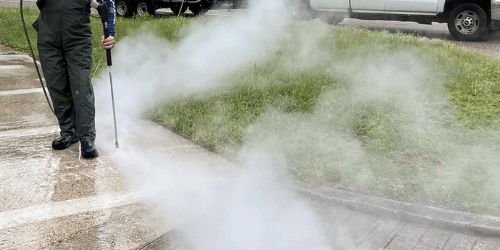
Before we stripe, we often address the surface first. Even “clean-looking” asphalt can have a thin film of grime, rubber buildup, or oxidized top layer that prevents striping materials from bonding. That’s why we frequently recommend pairing striping with parking lot cleaning and maintenance services so the lines go down on a properly prepared surface.
A realistic scenario we commonly handle
A property manager for a small office park in the Houston area calls us after noticing that visitors can’t tell where to park, and tenants are complaining about blocked walkways. The lot has decent pavement, but the markings are nearly gone—especially near entrances where vehicles turn sharply. After a quick inspection, we find the issue isn’t just fading strip lines; it’s also debris and worn surface texture that makes markings disappear quickly. The solution is a coordinated approach: cleaning, targeted repairs where needed, and then striping for clear traffic flow.
What Property Owners Often Overlook
Most owners focus on the visible result—fresh lines—but the problems that cause striping to fail are usually less obvious.
Common mistake property owners make
They try to “touch up” striping without proper prep or repair.
DIY touch-ups and rushed contractor schedules often skip the steps that matter:
- They stripe over loose debris and dust.
- They apply markings on damp surfaces after rain.
- They don’t correct areas where pavement is breaking down.
- They use materials that aren’t designed for the wear patterns of parking lots.
The consequence is predictable: peeling edges, inconsistent line thickness, and rapid fading—especially where cars turn and brake.
Mistakes That Shorten Surface Lifespan
Striping and surface maintenance are connected. If you treat them separately, you end up paying twice—once for appearance, and again for rework.
Here are the mistakes we most often see in Houston-area lots:
- Using the wrong cleaning approach: Aggressive cleaning with the wrong method can leave surface contaminants or damage the asphalt texture needed for adhesion.
- Ignoring oil and rubber staining: Dark streaks and tire residue can interfere with bonding.
- Skipping line layout for real traffic flow: Lines that “look right” on a plan don’t always match how vehicles actually move during deliveries, turnarounds, and peak hours.
- Waiting too long to restripe: When markings are fully gone, the lot often has more debris accumulation and uneven wear patterns—so prep becomes more critical.
Maintenance and Surface Protection Checklist (Before and After Striping)
A striping project should be more than paint on asphalt. Here’s a practical checklist to keep your markings crisp and your lot looking professional.
Before striping
- Inspect pavement condition (cracks, raveling, uneven patches)
- Plan line layout based on entrances, pedestrian routes, and turning behavior
- Remove surface contaminants (dust, debris, rubber buildup)
- Coordinate repairs first if the asphalt is actively breaking down
- Choose the right product for your traffic level and climate exposure
After striping
- Allow appropriate cure time before heavy traffic
- Avoid power washing too soon near fresh markings
- Schedule periodic cleaning so dirt doesn’t grind into the pavement surface
- Recheck high-wear areas (turn lanes, near entrances, handicap zones)
If you also manage walkways and hardscapes, it’s worth keeping those in sync. Many customers notice the “whole path” experience. For example, a clean striping layout can’t fully offset slippery or stained approach areas. We commonly support this by handling sidewalk and walkway cleaning support so pedestrian routes match the professional look of your parking lot.
Soft Washing vs Pressure Washing for Parking Lot Areas (When It Matters)
Not every surface in a commercial lot needs the same method. Asphalt, concrete, and surrounding exterior elements respond differently to water pressure and chemical exposure.
- Pressure washing can be effective for certain hard surfaces, but excessive pressure or incorrect technique can accelerate surface breakdown on some areas.
- Soft washing (low-pressure systems with appropriate solutions) is often safer for delicate exterior materials like siding, some masonry, and building-adjacent surfaces where you want to remove organic growth without forcing water into seams.
While parking lot striping itself isn’t “soft washed,” the adjacent building exterior often is part of the same curb appeal picture. If your parking lot is tied to a storefront appearance issue—like algae streaks on nearby walls—many owners combine coordinated exterior maintenance. For building exterior work, you can explore our approach via house washing services to see how we think about safe cleaning and longer-lasting results.
Recommended surface protection step
After cleaning and repairs, we recommend timing striping when:
- the pavement is dry and stable,
- temperatures support proper curing,
- and the lot can be managed so traffic doesn’t disrupt fresh markings.
That simple scheduling detail is one of the biggest “make it last” factors we can control on our end.
Spring and Houston-Area Relevance: Why Striping Fades Faster Here
Spring-area weather is tough on exterior surfaces. Gulf Coast humidity supports algae and organic growth on nearby walls and hardscapes, while heat and UV exposure degrade asphalt and striping materials over time. Then you add heavy rainfall and frequent temperature swings, which can wash out loose residue and accelerate wear at edges and turning points.
From our contractor perspective, the pattern is usually:
- Early season: lines look okay but gradually lose contrast.
- Rain-heavy stretches: dirt and fine debris accumulate, especially near entrances.
- Peak heat: UV and thermal cycling fade markings and reduce their crispness.
That’s why many properties benefit most from a maintenance plan that doesn’t only react when lines disappear—it refreshes striping when it still has enough surface integrity to hold up.
Our Experience Maintaining Gulf Coast Properties
When we work with commercial sites, we pay attention to what customers actually experience: how quickly people find spaces, whether vehicles can move predictably, and how the lot supports safe pedestrian access.
One thing we’ve learned maintaining Gulf Coast properties is that striping alone can’t fix underlying wear. If the asphalt is already breaking down or the lot stays dirty due to ongoing buildup, new lines won’t look sharp for long. That’s why we commonly coordinate striping with cleaning and, when needed, pavement maintenance.
If your lot needs more than appearance—like longer-term surface stabilization—owners often ask about options such as asphalt parking lot repair and maintenance. Sealcoating and striping can work together as part of a broader maintenance cycle, but the right sequence matters. Clean first, evaluate pavement condition, then protect and stripe based on what the surface needs.
Quick Comparison: What “Parking Lot Striping” Should Include
| Part of the Job | If Skipped | Common Result |
|---|---|---|
| Surface cleaning | Striping won’t bond well | Lines peel or fade quickly |
| Repairing failing pavement | Markings sink or crack | Patchy, uneven line appearance |
| Correct layout | Confusing traffic flow | Customers park incorrectly |
| Proper curing time | Lines get scuffed | Blurry edges and reduced contrast |
| Durable material selection | Poor wear performance | Short lifespan in high-traffic zones |
Ready to Protect or Improve Your Property’s Appearance?
Confident parking guidance is one of the fastest ways to make a property feel well-managed—especially for customers who arrive during busy hours and don’t have time to “figure it out.”
If you’re planning restriping in Spring, TX, we can help you assess what your lot needs (cleaning, repairs, and striping timing) so the results stay readable and professional longer.
About Jade Exterior Services
Jade Exterior Services provides pressure washing, exterior cleaning, roof cleaning, parking lot maintenance, gutter cleaning, and commercial property maintenance services throughout Spring, TX and the greater Houston area. We focus on long-term surface protection, curb appeal improvement, safe cleaning methods, and helping homeowners and businesses maintain cleaner, more professional-looking properties with reliable, detail-oriented service.
FAQ
How often should we restripe a commercial parking lot in Spring, TX?
Most properties need restriping when lines fade enough that drivers can’t reliably see spaces, arrows, and access routes. In Houston-area conditions, that can mean refresh cycles sooner than owners expect, especially in high-traffic zones and near entrances. A lot’s wear pattern matters more than a calendar date—vehicle turns, braking points, and surface condition influence how quickly markings degrade.
Can we stripe over existing lines that are still visible?
Sometimes, but it depends on the condition. If old lines are peeling, slick with debris, or inconsistent in height, new striping won’t bond or will look uneven. Proper surface prep and evaluation usually determine whether old markings can be overlaid or if removal/prep is necessary.
Is parking lot cleaning necessary before striping?
Yes, in most cases. Even if asphalt looks clean, residue, dust, and rubber buildup can reduce adhesion. Cleaning improves how well striping materials grip the surface, which helps lines stay crisp longer.
What’s the best way to keep new lines from fading quickly?
Keep traffic off fresh lines during curing, and avoid washing methods that disturb the surface too soon. For ongoing maintenance, schedule periodic cleaning so dirt doesn’t grind into the pavement and reduce contrast over time. Also address pavement issues early—cracks and raveling make striping fail faster.
Does sealcoating change how striping should be scheduled?
It can. Sealcoating and striping are often coordinated as part of a maintenance plan, but the timing and surface prep steps matter. The asphalt needs to be in a suitable condition so the seal and striping materials bond properly and cure as intended.